Burst Pipe Repair
Stop an active flood, then remove and replace the cracked or ice-split stretch of pipe. Open page
Wet drywall and carpet begin to sour within a day, and mold can follow soon after. Restoration is its own trade, separate from fixing the pipe: remove the water, dry the building and rebuild what could not be saved.
This page carries its own restoration number. Use it for anything involving water damage.
Cut off the source if you can reach it. For a broken pipe, close the main valve. When the water came from outside, such as snowmelt or a storm, stay out of it if any power is on, and cut electricity only from a dry position. Open windows if the weather allows.
Get small items, rugs and furniture legs up off wet floors. Photograph every room before you start cleaning, because your insurer will ask for those images and so will the restoration crew.
The industry standard for this work, IICRC S500, classifies water by how contaminated it is. That is a published guideline and not a credential claim about any contractor, so ask any company you call how it applies the standard. Category one is clean, like a split supply line. Category two, often called gray water, comes from a washer, dishwasher or sump overflow and carries some contamination. Category three is sewage or floodwater and is hazardous.
The grade decides what is saved. Porous material soaked with grade two or three water is usually removed. Grade one gives the best chance of drying in place, but only when work starts fast.
Restoration pricing follows the size of the wet area and the labor needed.
Ask whether the contractor deals directly with your insurer and what paperwork comes with the job.
Many homes in the area have finished basements, where a failed water heater or a split pipe can soak carpet, drywall and furniture before anyone notices. A floor drain or sump pit that backs up adds sewage to the picture.
Cold months bring the most burst pipes. After a hard freeze, look for stains on ceilings and walls, and shut off the main if you hear water running. Call a plumber for the pipe and the restoration line for the water, since they are separate jobs.
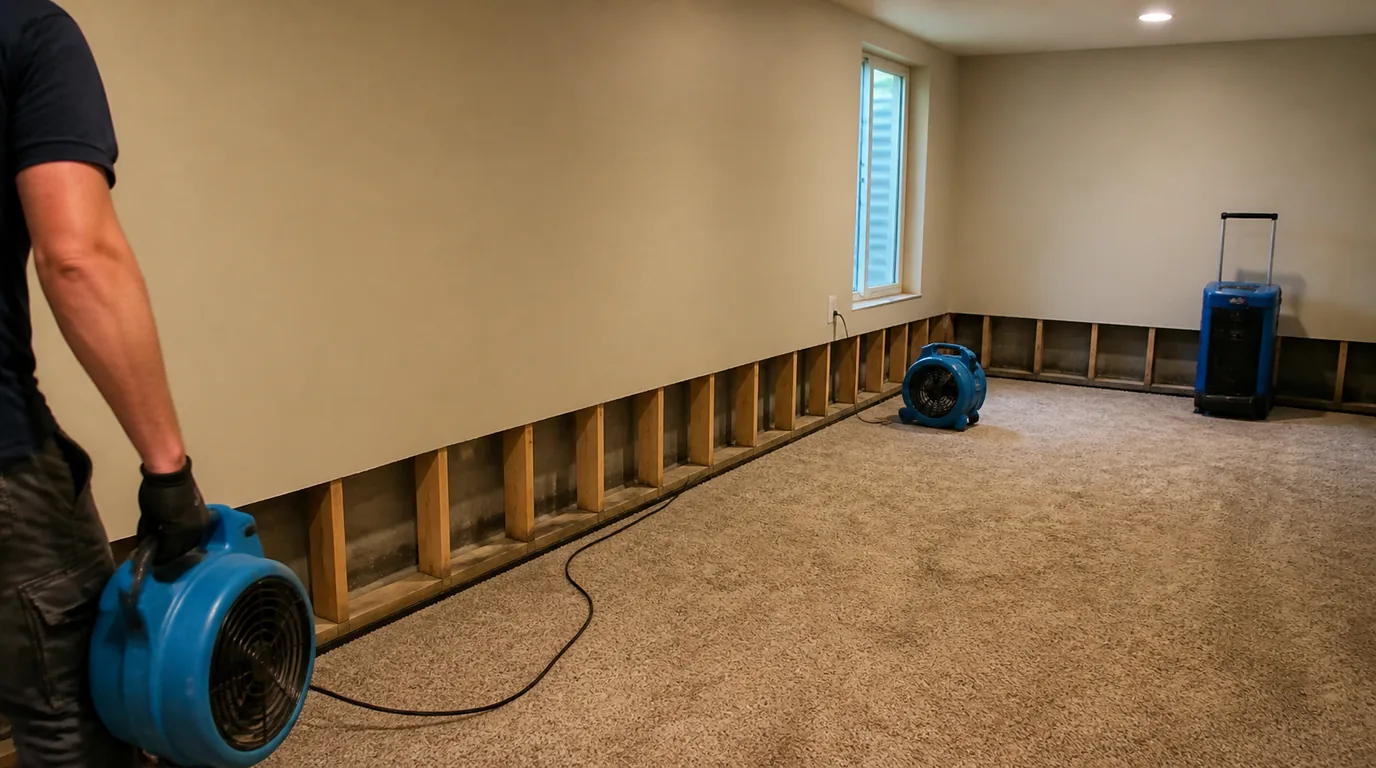
The crew pumps or vacuums standing water, pulls wet carpet pad, and sets air movers and dehumidifiers to draw moisture out of framing, subfloor and drywall. Meters track moisture in each material, and the readings are logged every day.
Drying usually takes several days. Ask to see the readings and the target numbers, and leave the equipment running until the crew says the building is dry. Shutting it off early invites mold.
Mold can start on damp materials in a day or two. Warning signs include a musty smell, discolored drywall and fuzzy spots in corners or behind furniture. Small patches on hard surfaces can be cleaned, while larger growth needs containment and removal.
Tell the crew right away if you suspect it. They can inspect the space and advise whether testing makes sense for your house.
Many homeowner coverage often applies to Sudden damage from a burst pipe or a failed appliance, and many exclude slow leaks and outside flooding. Call your insurer early, keep every receipt and ask what documentation they require.
Request a written scope of work, the moisture logs and dated photos from the crew. Together they support a claim and speed up approval.
Restoration does not fix a pipe. A plumber has to repair the cause first, or the room will flood again. See burst pipe repair for that side of the job, and water heater repair if a tank failed.
Ask both trades to coordinate. The pipe repair often opens a wall, and the drying crew wants that opening left in place until the framing is dry.
Stop an active flood, then remove and replace the cracked or ice-split stretch of pipe. Open page
Pinpoint where water is escaping inside walls, beneath floors or along the buried line before anything is opened up. Open page
Work out why showers run lukewarm, why a tank drips, popping sounds and dead pilots or elements. Open page
Right away. Mold can start within a day or two on wet materials.
No. This page has its own number. Use it for restoration.
Small spills, yes. Soaked carpet and pad usually need professional drying or removal.
Many policies pay for sudden events. Check with your insurer before you approve any work.
Yes. It is separate from the plumbing number and answered at all hours. Stop the water at the source if that is safe, then describe what got wet.
Call the restoration line now. A dispatcher will take the details.
Service area centered on Thornton and nearby Adams County towns.