Slab Leak Detection & Repair
Locate and mend a pipe that has failed beneath the concrete floor of a slab-on-grade house. Open page
A water bill that rose for no clear reason, a damp patch with no source, or a meter dial that moves when every tap is off. Detection work shows where the water goes before anybody opens a wall. Water that is spreading at this moment justifies a call to the 24/7 line rather than a wait until business hours.
Phone in with what you have noticed, and a nearby contractor takes it from there.
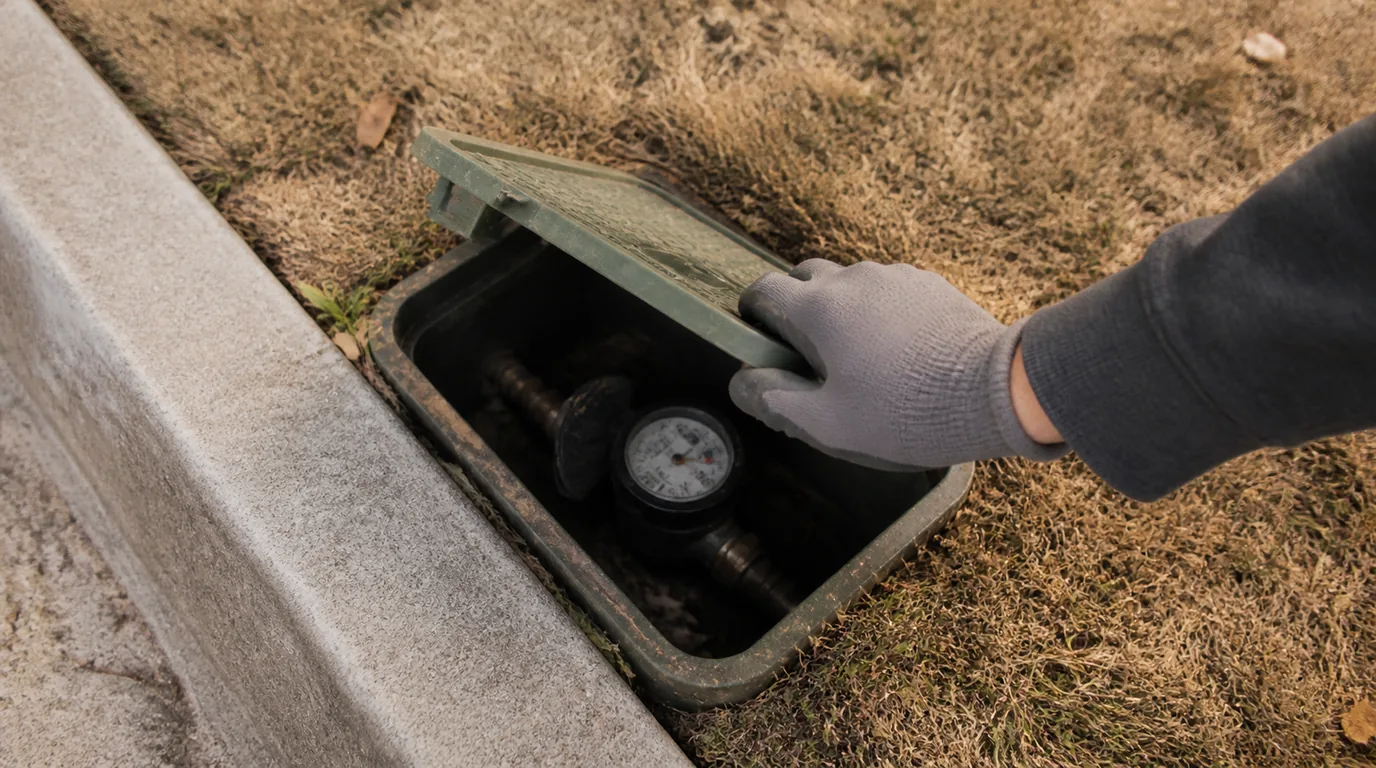
The cheapest test costs nothing. Close every tap, pause the ice maker, washer and sprinklers, and read the small leak indicator on the meter. A dial that keeps creeping means water is leaving the pipes somewhere past the meter.
After that, look at each toilet. A flapper that fails to seal can lose a surprising amount of water silently. Color added to the tank will appear in the bowl within a quarter of an hour if the flapper is leaking.
If the meter holds still with the house off, the leak may only show when the system is under use, or it may be intermittent. Say so on the call, because that changes how the search is planned.
Finding a leak is a process of elimination. The technician shuts the main, watches whether pressure holds, and then closes off one branch after another until the pressure behaves, which reveals the stretch of pipe at fault.
Once the section is known, instruments do the pinpointing. Acoustic listening picks up the hiss of escaping water along a pipe, a thermal camera reveals a cooler or warmer patch behind a surface, and a pressure test confirms whether a line holds. The aim is a small, accurate opening in the right place.
That matters in a finished basement or a tiled bathroom, where a wrong guess means extra patching. Ask what the access hole will look like and who repairs the drywall or tile afterward.
Many Thornton homes have a basement with a laundry room, a water heater and a bathroom, so a slow leak has a lot of finished space to reach. Check the floor near the heater and the washer when you test the meter.
The service line from the city meter to the house runs about four feet underground, which keeps it below most frost but makes a leak there easy to miss. Soft ground or green grass in one patch of the yard can be a clue. Call Colorado 811 before anyone digs.
Finding a leak is normally billed for the time and the technique it takes, with the repair priced afterward. Four things push the amount up or down.
Some companies credit the search fee when they also do the repair and some do not, so ask and have the answer written on the quote.
Water likes to escape inside walls, behind tub access panels, at the hose to a fridge or washer, and above basement ceilings. Outside, irrigation valves and the pipe running from the meter to the house cause most of the trouble.
A drain leak and a supply leak leave different clues. Drain pipes only drip while water flows through them, so a stain that shows up after laundry or a shower implicates the drain, while a stain that keeps spreading all day suggests pressurized supply pipe.
Heaters, softeners and humidifiers each add connections of their own, and a slow drip behind a cabinet door can go unseen for months.
Thornton's oldest houses date to the mid 1950s. Steel pipe corrodes at threaded joints, and early copper can develop pinholes where the water chemistry is rough on the pipe. Pinholes can spray a thin mist inside a wall for a long time.
Houses from the 1980s and early 1990s sometimes have gray polybutylene supply pipe, which leaks at fittings. Newer homes with PEX tend to leak at a connection that was crimped poorly. Telling the dispatcher the year your house was built helps a contractor bring the right tools.
The technician points out the spot and lays out the repair. A worn shutoff valve is quick to swap, but a pinhole in a long run inside a finished wall can mean bigger work with several ways to go about it.
Find out if the price covers only the pipe or also the opening in the wall. If water has already soaked insulation or drywall, drying is a separate job described on the water damage restoration page.
Locate and mend a pipe that has failed beneath the concrete floor of a slab-on-grade house. Open page
Mend or renew the buried pipe between the city's meter and your foundation when it breaks or corrodes. Open page
Pump out standing water, dry framing and finishes and rebuild after a leak, freeze or sewage backup. Open page
Close every tap and look at the meter. Movement of the indicator means water is going somewhere. A bill that suddenly rises, a musty odor or a warm floor patch also point that way.
Usually not at first. The plumber isolates sections, listens and scans with a thermal camera, then opens only the exact spot. A leak that appears only under load takes more time to catch.
It does when the water is spreading or sitting near outlets. Close the main and phone. A weak seep can hold until morning, though the harm builds the longer it goes.
A few policies reimburse locating a sudden leak, and many will not pay to replace worn pipe. Read your policy and check with your insurer before the work begins.
Yes, the number is staffed overnight and on weekends. Explain where the water appears and how the meter behaves, and the dispatcher finds a nearby contractor. Shut the main first when you can reach it, and ask when someone can arrive.
Close the main if you can reach it, then phone and describe what you found. The dispatcher outlines what comes next.
Service area centered on Thornton and nearby Adams County towns.