Hydro Jetting
Strip away grease, mineral scale and root hairs from inside a pipe using a high pressure water stream. Open page
A slow sink, a tub that holds water or a toilet that gurgles are all signs of a blockage somewhere in the drain. The fastest fix depends on how far down the clog sits.
Tell the dispatcher which fixtures are slow and whether more than one is affected.
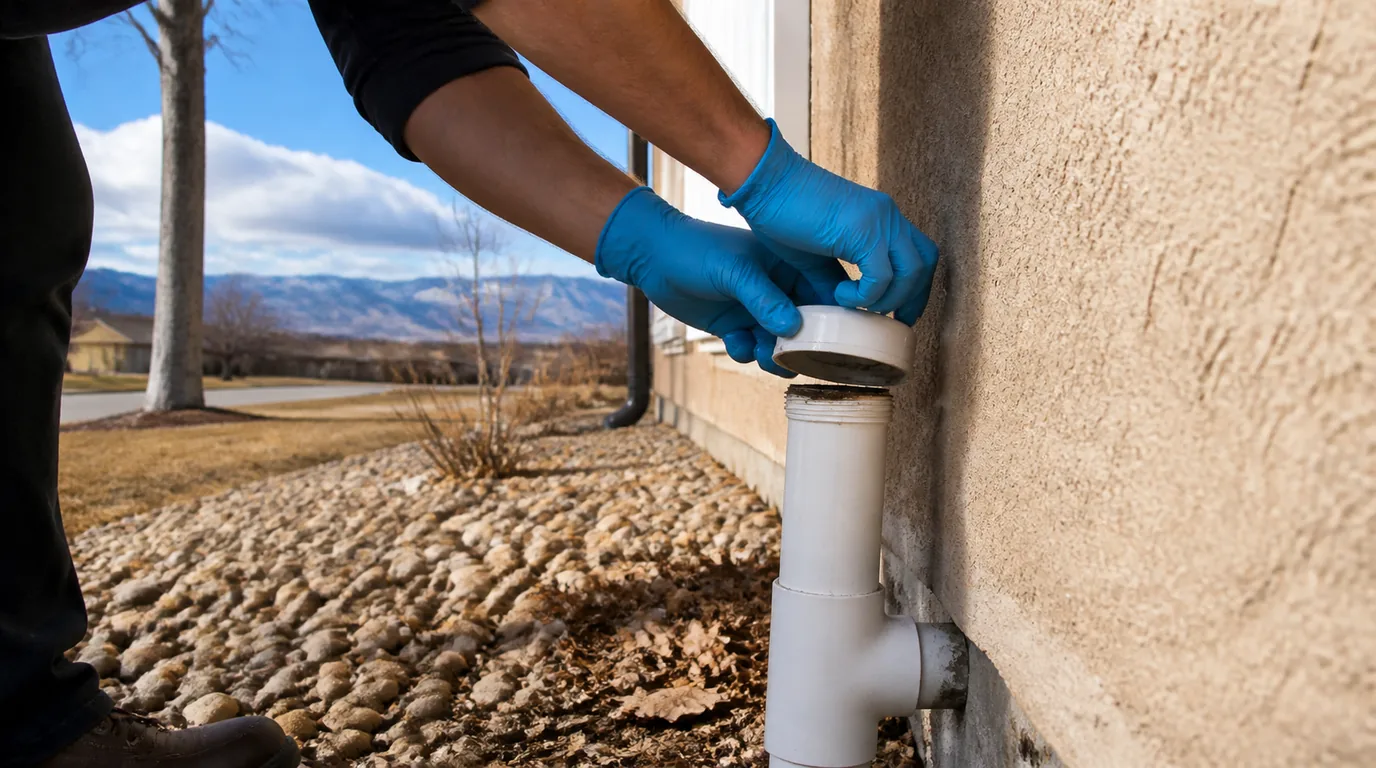
A single slow sink usually has a clog in the trap or the short pipe behind it. A plunger or a drain snake may clear it. If a tub and a toilet on the same floor are both slow, the clog is farther along in the branch.
When the lowest drain in the house bubbles or backs up, or several fixtures act up together, the main line is the likely culprit. Stop using water and call.
Kitchen drains clog with grease, food and coffee grounds. Bathroom drains clog with hair and soap scum. Toilets clog with too much paper or items that do not belong, including wipes labeled flushable. The City of Thornton asks residents not to flush wipes or paper towels and to put cooking grease in a can instead of the drain.
Roots are a different problem. They enter older clay or fiber sewer lines through small cracks and grow into a tangle that catches everything. That is why a clog that returns every few months deserves a closer look.
In houses with basements, the lowest drains sit close to the main sewer line, so a blockage shows up there first. A floor drain that gurgles as the washer runs is a classic warning.
Thornton's collection system covers about 511 miles of sewer line, and the city inspects its lines and washes them to keep them clear. The pipe from your house to the city main is yours to maintain, so ask for a camera look if the problem returns.
Drain cleaning prices depend on how far the clog sits and what it is made of.
Ask if the visit includes a camera look, and what a follow-up costs if the clog returns.
A hand auger or drain machine cuts through most clogs. For a heavy buildup, a cable with a cutting head clears grease and roots from the pipe wall. Hydro jetting uses high pressure water to scour the pipe, and a camera shows what is inside.
The right tool depends on the pipe, the clog and the condition of the line. A plumber should explain why a tool was chosen and what the camera shows if one is used.
Chemical drain cleaners can damage pipes and are a hazard to anyone who later works on the line. Avoid mixing products and never use them in a toilet that is already full.
If you must clear a clog yourself, wear gloves, use a plunger or a small hand snake, and stop if the water level rises. A full backup in a basement is a job for a plumber.
Use drain strainers, wipe grease from pans before washing, and run hot water after a heavy kitchen session. Flush only toilet paper. Have the main line inspected if you have had more than one backup.
If your house is older, a camera inspection every few years can catch cracks and roots before they cause a flood. The inspection page explains what the footage shows.
Strip away grease, mineral scale and root hairs from inside a pipe using a high pressure water stream. Open page
Feed a camera down the line to see its true condition before you pay for repairs or close on a house. Open page
Correct a broken, root-invaded or bellied sewer lateral, whether the repair is one spot or a longer run. Open page
When the same drain stops up again and again, something in the pipe is usually responsible: roots, a low spot that holds water, or a coating of grease. A camera shows which.
It is best to avoid it. Chemicals can harm pipes and are unsafe for anyone who later works on the line.
Stop using water. Several drains acting up together usually points to the main sewer line, and it needs a plumber.
Yes, if sewage is coming up. Keep people away, avoid contact and call the 24/7 line right away.
Stop using water and phone the 24/7 line. A dispatcher will get a contractor lined up.
Service area centered on Thornton and nearby Adams County towns.