Leak Detection
Pinpoint where water is escaping inside walls, beneath floors or along the buried line before anything is opened up. Open page
Some Thornton houses run water lines under the concrete floor, in a slab or beneath a basement floor. When one of those pipes leaks, the signs are subtle at first: a warm floor, a hissing sound or a bill that will not settle. Water seeping up through the floor or a warm spot on the slab merits a phone call whatever the hour.
Call and describe the warm spot, the noise or the damp floor you found.
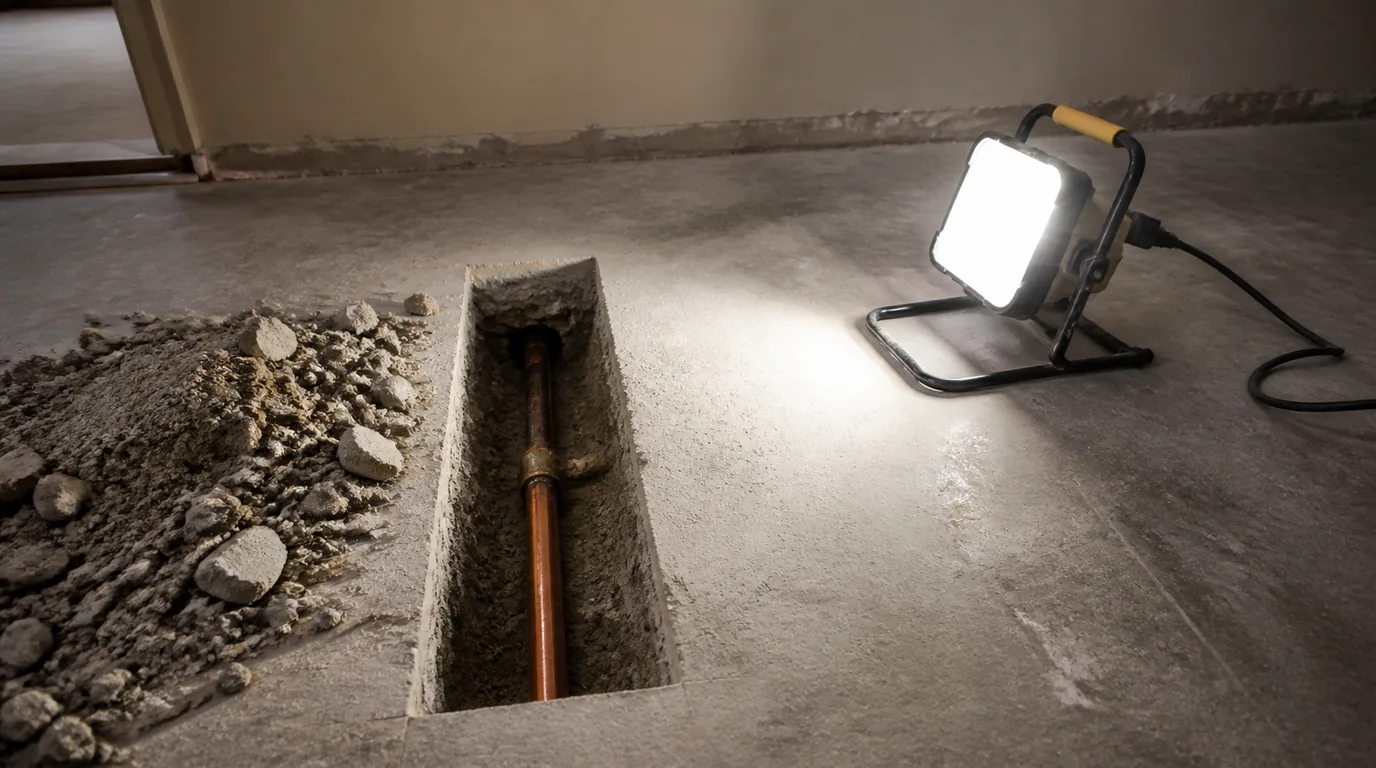
Under a slab, a leak means a pipe that runs under or inside a concrete floor. The pipe may carry hot or cold supply water, and sometimes the leak is in a drain line that passes through the slab.
Because the pipe is buried, the first signs are indirect. You may see a damp spot on a carpet, a floor that feels warmer in one place, baseboards that swell, or a meter that runs with every tap off.
A plumber starts by isolating the house and testing which line is losing pressure. Then acoustic equipment picks up the sound of water escaping, and a thermal camera can show a hot water line warming the concrete above it.
The aim is a tight outline on the floor right over the leak. A tight mark limits how much concrete is cut. Ask the plumber to show you the mark and explain what will be opened before work begins.
Slab leak work ranges from a simple spot fix to a larger reroute. These factors move the number.
Ask who handles the floor afterward, since the plumber may only patch the concrete and a flooring trade may complete the finish.
Not every Thornton house has a slab with pipe under it. Many have basements or crawl spaces where lines are exposed overhead, and the pipe can be checked without cutting concrete. Ask the dispatcher or the plumber to confirm where your lines run before you plan around a slab leak.
Expansive soils, common along the Front Range, can push on foundations. If you also see new cracks in drywall or doors that stick, mention it, since movement can be tied to a pipe failure.
A spot repair opens the slab over the leak, removes the damaged piece and puts in a new one. It makes sense when the pipe is otherwise in good shape and the leak is a single failure.
Rerouting leaves the failed line dead under the floor and runs fresh pipe overhead or inside walls, so the slab does not have to be cut again. A repipe replaces many or all of the lines when several have failed. The page on repiping explains how that choice is made.
Soil movement, rubbing against a sharp edge of the slab, high water pressure and corrosion all play a part. Colorado's clay-rich soil swells when wet and shrinks when dry, which can load pipe that passes through the foundation.
Hard water adds scale and can speed up pinholes in copper. A pressure reducing valve that is set high, or has failed, will push pinholes along faster. A plumber can read your pressure with a simple gauge on a hose bib.
If you suspect a slab leak, shut off the water to the house when you leave, and raise rugs and furniture off the floor near the damp area. Watch the meter to see how fast it moves so you can describe it on the call.
Keep records of the dates you noticed signs and take photos. They help with an insurance claim, and they help the contractor judge how long the leak has been running.
Pinpoint where water is escaping inside walls, beneath floors or along the buried line before anything is opened up. Open page
Retire worn galvanized, copper or polybutylene supply pipe with new lines across the whole house. Open page
Pump out standing water, dry framing and finishes and rebuild after a leak, freeze or sewage backup. Open page
Typical signs are a warm spot on the floor, running-water sounds in a silent house and a meter that will not stop. A plumber confirms it with a pressure test and listening equipment.
Policies are not uniform. A few pay for of reaching the leak and the resulting damage, but not the pipe itself. Ask your insurer before work begins.
A spot repair opens only a small section of the floor. A reroute avoids cutting the floor again by running new pipe through walls or the ceiling.
Yes, at the main valve if you are away or cannot get a plumber right away. It stops the water from running into the soil under the house.
Call the 24/7 line right away if water is coming up through the floor, the meter will not stop or part of the slab feels hot. Shut off the main valve first. A slow, steady leak with no visible water can usually wait for a morning visit.
Shut the main If you can reach it, then phone in with what you noticed and when it began.
Service area centered on Thornton and nearby Adams County towns.