Leak Detection
Pinpoint where water is escaping inside walls, beneath floors or along the buried line before anything is opened up. Open page
Repeated leaks, rusty water and low pressure often mean the pipes have reached the end of their life. A repipe replaces them all at once so you stop chasing one repair after another.
Tell the dispatcher your home's age and what you have noticed.
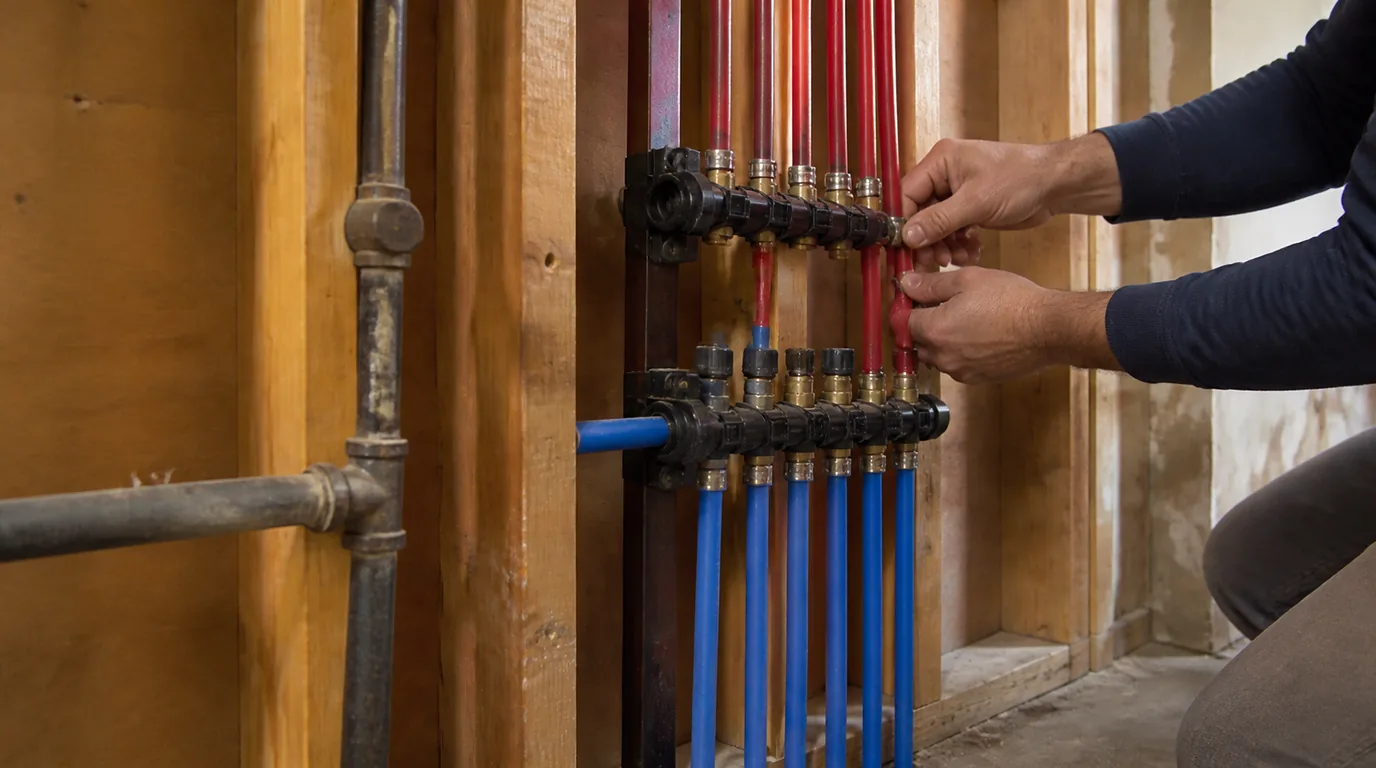
A whole-home repipe replaces most or all of the supply pipe in a house, from the main shutoff to each faucet, tub and appliance. The old pipe is abandoned or removed, and new pipe is routed through walls, floors and attic or basement spaces.
It is a larger project than a spot repair, but it ends the cycle of repairs. Done well, a repipe also fixes pressure problems that come from narrowed pipe.
Consider a repipe when the same pipe keeps leaking, when water pressure has dropped across the house, or when inspection shows widespread corrosion. Gray polybutylene pipe, used in some houses from the late 1970s to the mid 1990s, is a common reason to repipe before a failure.
A single leak on an otherwise healthy line is usually better handled with a spot repair. A plumber can tell the difference after checking several fixtures, the pressure and the visible pipe.
Thornton's oldest houses began going up in the 1950s, when galvanized steel was a common supply pipe. After seventy years, many of those lines are narrow and rough inside. Later decades brought copper and, in some houses, gray polybutylene.
Ask the plumber to check which materials are in your house and where they transition. A mix of old and new pipe is common after earlier partial repairs.
A repipe is a project, and its price depends on the house. These items matter most.
Request a written scope that itemizes the fixtures included, the material, the number of openings and who repairs them.
PEX is a flexible plastic pipe that is quick to run through walls and handles temperature swings well. Copper is a metal pipe with a long record and a different cost profile. Hard water can be rough on copper, so ask the plumber how the water chemistry affects your choice.
Whichever you pick, ask about fittings, pressure testing and how access holes will be handled. The materials should meet local code, and permits may apply.
The plumber maps the house, plans the route and shuts off water for the day or longer. New pipe is run first, then connected at fixtures, and the old lines are capped off or taken out.
Most repipes need small openings in drywall at key points. Ask how many, where and who repairs them. A well-planned repipe leaves only a few patches, but it is still a project that disrupts a house for a day or more.
Plan for The water to be shut off for part of each day. Cover furniture, move items away from walls the crew will open and set aside a temporary bathroom plan. If you have pets, keep them away from work areas.
After the job, run every fixture, look for drips at the connections and note any changes in pressure. Keep the warranty paperwork with your house records.
Plumbing in Colorado is licensed through the State Plumbing Board, which sits inside the Department of Regulatory Agencies (DORA). DORA runs an online license search, so you can type in the name or number a contractor gives you and see the license type and status before any pipe is cut. Whole-house repipes usually need a permit and an inspection from the building department that covers your address, and the contractor should say who files for it.
Pinpoint where water is escaping inside walls, beneath floors or along the buried line before anything is opened up. Open page
Mend or renew the buried pipe between the city's meter and your foundation when it breaks or corrodes. Open page
Locate and mend a pipe that has failed beneath the concrete floor of a slab-on-grade house. Open page
Repeated leaks, rusty water, falling pressure or gray polybutylene pipe are common reasons. A plumber can inspect the pipe and test the pressure.
The answer turns on house size and how reachable the pipe is. Get a written schedule from the contractor, including the hours the water will be shut off.
Both work. PEX is flexible and quick to install, while copper has a long track record. Ask how each fits your water and your house.
If narrowed old pipe is the cause, yes. If the problem is the pressure regulator or the service line, the plumber will point that out.
A full repipe is planned work and is scheduled with the contractor in advance. A line that fails at night can be reported to the 24/7 line, and the crew deals with the break before the larger project is discussed.
Call and describe what you have noticed. A dispatcher can set up a conversation about a repipe.
Service area centered on Thornton and nearby Adams County towns.