Sewer Camera Inspection
Feed a camera down the line to see its true condition before you pay for repairs or close on a house. Open page
A broken sewer line sends waste back into the house or into the yard. Repairing it means finding the damage, choosing a method and getting the line back into service as soon as possible. Sewage rising into the house means you should stop running water and phone the 24/7 line right away.
Tell the dispatcher if sewage is inside the house and which drains are affected.
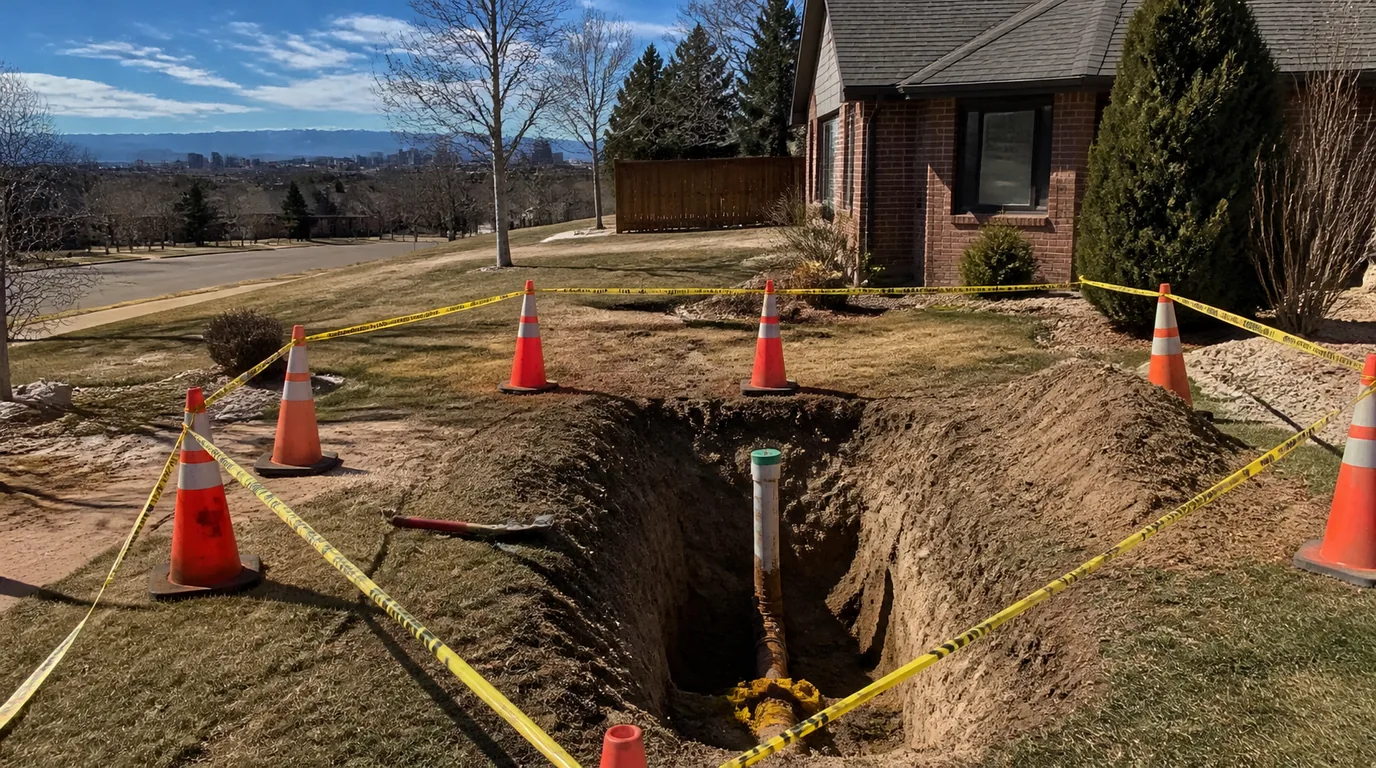
Your lateral is the buried pipe that moves waste out of the house to the city main. In Thornton, the city maintains the main and a large collection system, and the owner is generally responsible for the lateral on the property side.
Because it is buried, problems appear indirectly: a gurgle, a slow tub, a smell or a wet patch. A camera shows the pipe from inside, with no digging.
Roots enter through joints and cracks. Clay tile sections crack under soil movement. Fiber conduit, used in many mid-century houses, can deform and collapse. Heavy loads, a belly where soil has settled and past repairs that failed all contribute.
Grease and wipes do not break the pipe but make clogs worse where the pipe is already damaged.
Thornton's wastewater is collected through about 511 miles of city sewer line and treated at Metro Water Recovery. The city asks residents not to flush wipes, paper towels or similar items, even ones sold as flushable.
The line from your house to the city main is generally the owner's. If you are unsure, ask the city utility where its part begins before you commit to a repair.
Sewer work is priced by the scope and the method. These items matter most.
Ask whether the quote includes backfilling and restoring the surface, and whether a follow-up camera inspection is part of the job.
A spot repair opens a small section, removes the damaged pipe and replaces it. A longer section replacement handles bigger damage. Trenchless methods, such as lining the pipe with a resin sleeve or pulling a new pipe through the old, avoid digging up the yard.
Lining suits a pipe that is cracked but still round. It does not suit A pipe that has caved in or has a large belly. The camera footage guides that choice.
If sewage is backing into the house, the first job is to clear the line enough to stop the backup. Then the plumber cameras the line to find the cause and discusses repair options with you.
Ask for the camera footage, a clear scope and a quote before work. A temporary clearing is not a repair, and the problem will return without one.
Sewer work usually needs a permit and an inspection. Call Colorado 811 before digging so buried lines are marked. Ask Who obtains the permit and who books the inspection.
Some insurance policies cover sudden sewer damage but not repair of a worn pipe. Read yours and ask about water backup coverage, which is often a separate rider.
Feed a camera down the line to see its true condition before you pay for repairs or close on a house. Open page
Install a fresh lateral linking the house to the street main once the old pipe is beyond repair. Open page
Unblock a sink, tub, washer line or main drain, then learn what caused the stoppage. Open page
Several drains acting up together, a sewer smell and a wet yard patch are signs. A camera inspection confirms it.
Some policies cover sudden damage but not wear. Ask your insurer.
Often yes, with lining or pipe pulling. The camera shows whether your pipe qualifies.
A single spot can be done in about a day, and longer stretches take more. Ask for the schedule alongside the quote.
Stop using the sinks, tubs, toilets and washer, because each gallon adds to the spill. Keep children and pets away from the affected room and phone the 24/7 line. Crews usually clear the blockage first and look for the cause afterward.
Stop using water and phone the 24/7 line. A dispatcher will connect you to a contractor.
Service area centered on Thornton and nearby Adams County towns.