Commercial Plumbing
Plumbing help for stores, offices, restaurants and buildings with several tenants. Open page
A backflow preventer is an assembly of valves that stops used water from running backward into the clean supply. Lawn sprinklers, fire lines and some commercial equipment use them, and many utilities require annual tests.
Tell the dispatcher what the device serves and when it was last tested.
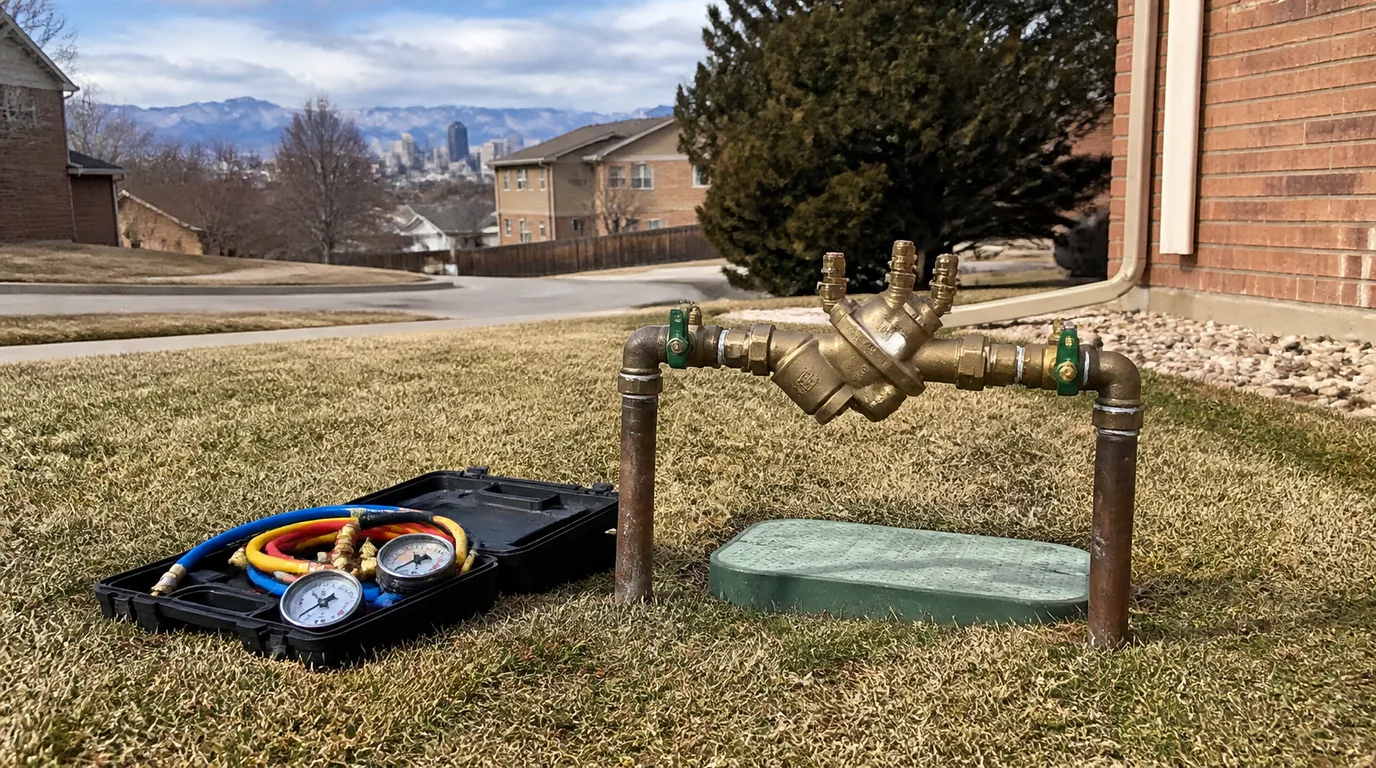
Water usually flows from the utility into the house. If the pressure drops in the main, as during a break or heavy firefighting, water can be sucked backward. A sprinkler head sitting in a puddle of fertilizer is a classic example of a cross-connection that could contaminate drinking water.
A backflow preventer is a mechanical check that stops reverse flow. Different types, from simple vacuum breakers to reduced pressure assemblies, suit different hazards.
Springs, seals and check valves wear out. A device that looks fine from outside may not hold. Testing uses a gauge to measure how the internal checks and relief valve behave.
Many water utilities require testing at set intervals, usually yearly, and they want the report. Ask your utility what it needs and who may do the test.
Front Range lawns depend on irrigation in summer, which makes backflow devices common. They also face hard freezes, so winterizing each fall is part of owning one.
Ask your water provider what applies at your address. Requirements vary by property and by the type of device.
Backflow work varies with the device and what the test turns up.
Ask whether a retest after repair is included.
A certified tester attaches a gauge, closes the shutoff valves in a set order and records the readings. If the device passes, they file the report. If not, a repair or replacement follows, then a retest.
The test takes a short time, and water is turned off briefly to the irrigation or building zone.
Common repairs include replacing check valve seats, springs and relief valve parts. A device that has been damaged by freezing or is leaking from the body may need to be replaced.
Install heights, clearances and enclosures matter. A device installed too low can flood in a leak, and one in an uninsulated spot can freeze.
In cold weather, shut off the water to the irrigation system, drain the lines and drain the backflow assembly. Freezing water cracks the brass body of an exposed device.
A hot box or an insulated cover can protect a device in a winter freeze, but draining is the sure way.
A test report is a short form that records the device type, serial number, the test results and the tester's certification. Keep each year's report together. If a device fails, the repair and the retest should be recorded the same way.
On test day, clear access to the device. Shrubs, snow and locked enclosures slow the tester down. Know where the shutoff for the line is, since the water to the irrigation or fire line is turned off briefly during the test.
Ask the water provider what it requires and by when. Requirements for who may test, which forms to file and what the deadline is vary by provider, so confirm them early rather than the week the notice expires.
Test schedules and tester requirements are set by the local water provider and the city, not by this website, so start with the notice you received and ask the provider which forms it accepts and which testers it recognizes.
Plumbing help for stores, offices, restaurants and buildings with several tenants. Open page
Trace a spa leak, renew worn unions and valves, or plumb in a replacement hot tub. Open page
Pinpoint where water is escaping inside walls, beneath floors or along the buried line before anything is opened up. Open page
Most systems do, and many utilities require one. Check local rules.
Often once a year. Your utility sets the schedule.
A certified tester. Ask your utility if it keeps a list.
Sometimes. A cracked body usually means replacement.
Phones are staffed every hour of every day. Annual tests tend to be booked for weekdays, but a device that is spitting water or has failed deserves a report whenever you notice it.
Call and share the device details. A dispatcher will connect you with a tester.
Service area centered on Thornton and nearby Adams County towns.